
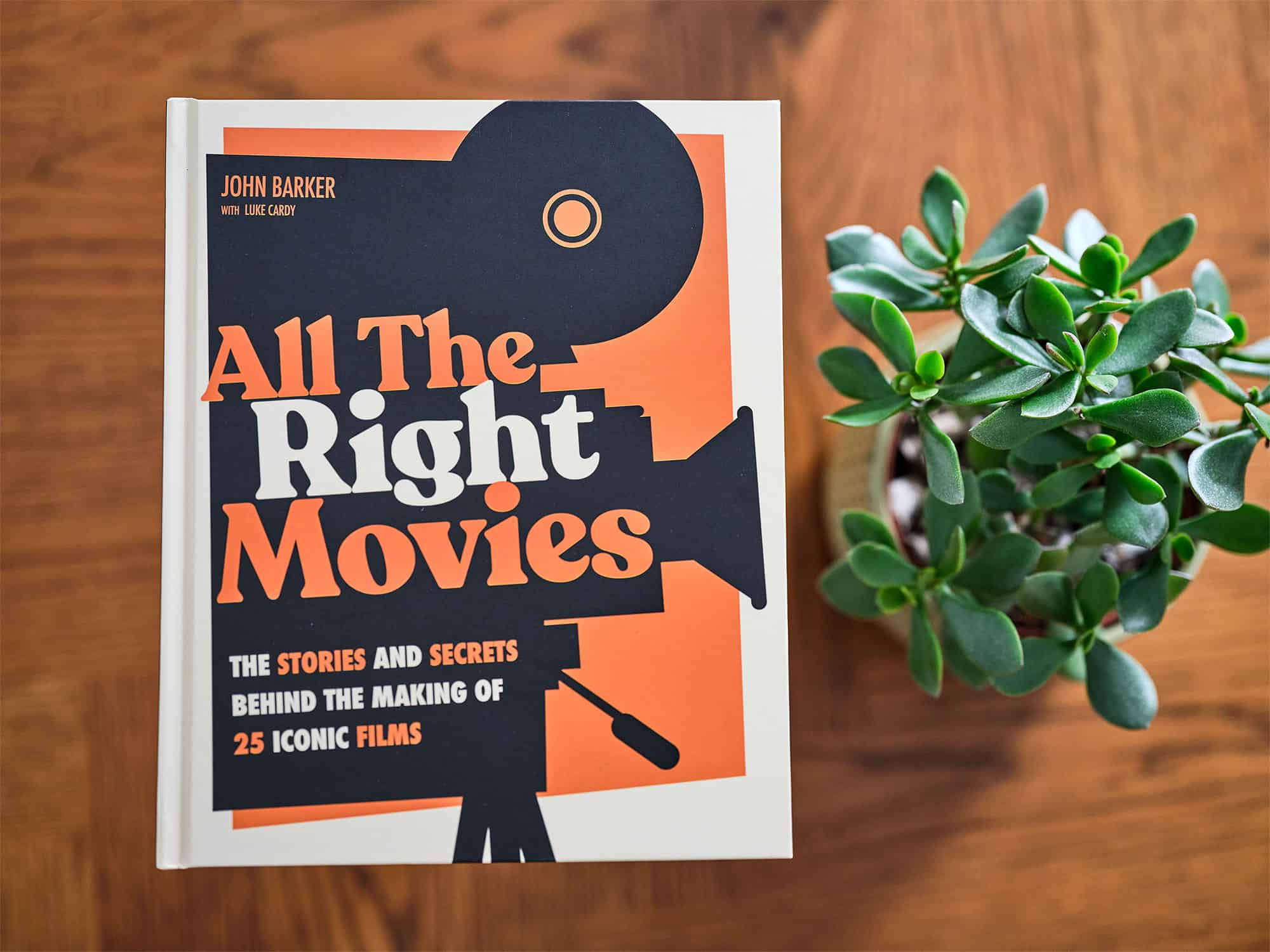
On 3rd August 2023, a literary agent in New York emailed to say he’d been reading our threads on Twitter and thought there was a book in them. Two and a bit years later, that email has become All The Right Movies: The Stories and Secrets Behind the Making of 25 Iconic Films, out September 2026 with Quarto Publishing.
Every book has two stories: the one inside it and the one behind it. For a book about how films get made, it felt only right that the story of how this book got made would be worth telling too. There was no plan or grand pitch. There was a podcast, a research library, a lot of posts on Twitter, and one well-timed email from New York. What follows is the rest of it.
The library
Long before there was a book, there was a problem. We’d spent the best part of two years building deep research libraries for the podcast – books, documentaries, interviews, archive features, primary sources cross-checked against secondary ones — and most of it was sitting on a shared drive doing nothing once an episode aired. Each film we covered generated thousands of words of notes, only a slice of which made it into the conversation.
In early 2023, we started turning that material into long-form making-of threads on Twitter. The thinking was straightforward. We had the research, we had a podcast to grow, and the platform rewarded depth on text in a way most others didn’t. So we adapted what we already had: the production story behind a single film, told in 40 to 60 posts, every claim corroborated against three sources or pulled directly from someone who’d worked on the film.
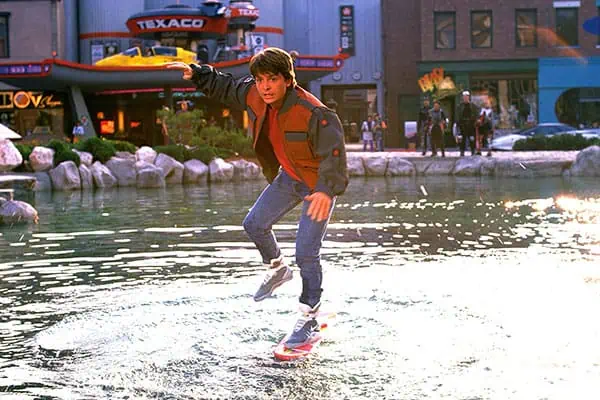
It worked better than we’d planned for. The Back to the Future thread alone picked up over 34,000 retweets and around 40 million impressions. We posted almost daily, and over two months the account grew by roughly 300,000 followers. The threads weren’t designed as a calling card, though, they were us trying to make the most of work we’d already done. Looking back, they were a proof of concept for something we hadn’t yet worked out as an idea.
The email
The email came in early August. Matt – an agent at New Leaf Literary in New York – had been watching the threads, thought the writing would sit well on a page, and wanted to represent us. The pitch was simple enough: a book based on the same approach as the threads, scaled up.
The timing was strange, though. A few weeks earlier, I’d briefly looked into self-publishing routes for a book idea I hadn’t quite worked through. Matt’s email hit the right week. We had a call, got on, signed an agreement, and the work started.
The proposal
Matt’s process was simple. We’d write a book proposal, and he’d take it round publishers in New York and London. I’d never written one before, but the brief was clear enough: explain the concept, prove the audience, and demonstrate the brand’s voice on the page.
I treated it as a piece of ATRM content rather than a corporate document. It was designed in our brand colours, structured properly, and written the way we write everything else, with a focus on narrative. The reasoning was straightforward — if a book about how great creative work gets made couldn’t itself look like a piece of decent creative work, we were making the wrong argument.
Most publishers passed. Then Quarto came back with interest. They specialise in illustrated books, knew the visual potential of the format we were proposing, and had a clear point of view on how to make it work. We met with them, liked them, and signed pretty quickly. In all, it was about eight months from Matt’s first email to a deal.
Quarto did push back on one thing. Our original pitch was 30 films across six genres. Their team felt 30 was too many for the format they had in mind, and after a few discussions we agreed to bring it down to 25 films across five: Action, Drama, Horror, Thriller, and Science Fiction. In hindsight they were right. Five films per genre is tight enough to force choices and loose enough to let each genre breathe and low.
The writing
The book follows a structure that will feel familiar if you’ve spent any time with our other work. Each genre opens with a chapter walking through its history — the cinematic origins, the decades of evolution, the films that defined it. Then five film chapters per genre, and inside each one: a short introduction making the case for the film, a cast and crew overview, the making-of story told as 50 facts (plus a bonus 51st), an exclusive interview with someone who worked on the film, and a full infographic page visualising the production data.
The making-of fact format borrows directly from the threads. Same chronological arc — origins, casting, pre-production, filming, post-production, release — but with more room per fact and a headline carrying a touch of ATRM personality. The interviews are entirely new. So are the genre histories. So are the film introductions, which sit at the most stylistically ambitious end of the writing, and so are the infographics.
I wrote the introduction first to lock the tone and structure, then 18 of the 25 chapters. My co-director Luke wrote seven, working to the same template, and a couple of his ended up as co-writes after the edits. The internal QA, the line edits, and the final pass were on me, meaning it was a heck of a lot of work and a lot of midnight work day finishes.
What made it possible at all, though, was the foundation already being there. The research methodology — primary sources, three-source corroboration, a proper workflow — already existed from other places and was being applied. Most of the films we’d covered or were covering on the podcast already had research libraries waiting. The book wasn’t a sideways step into something new; it was a different format for the same work.
The interviews
This is one of the parts of the book we’re most proud of, and the part that exists because of decisions made years before the deal. Each of the 25 films comes with an interview with someone who worked on the film — a director, screenwriter, casting director, actor, editor, composer, visual effects supervisor, or production designer. Five questions each, handled in the interviewee’s own voice.
A handful that we’re particularly excited to share: David Morrell, the author of the First Blood novel that gave the world Rambo. Jan de Bont — director of photography on Die Hard and director of Speed — across two chapters. Daniel Myrick, co-creator of The Blair Witch Project. Roger Christian on both Star Wars and Alien, two films he set-decorated and art-directed his way into film history with. And David Webb Peoples, screenwriter of Blade Runner.
Twenty-five films, twenty-five voices, and every one is a first-hand source. Some of these conversations went to places we hadn’t expected, and a few corrected things that have been printed about these films for decades. That’s the bit a deeply researched written format unlocks that even the podcast can’t quite — these are stories from the people who were there, in their own words.
Why this book exists
The book exists because of the social threads. The threads exist because we’d built a research methodology for the podcast we were proud of and didn’t want sitting unused. The methodology exists because we made a decision early on that ATRM would take its research seriously — not as a marketing line but as a working standard.
Each of those decisions was made for its own reasons, none of them with a book in mind. The book is what happened when those decisions compounded.
Quarto’s marketing campaign launches closer to publication, and we’ll have plenty more to share between now and then but for now, the pre-order is live. If you’ve followed the threads, listened to the podcast, or supported us as a patron over the last few years, the book is in part a product of all of that.
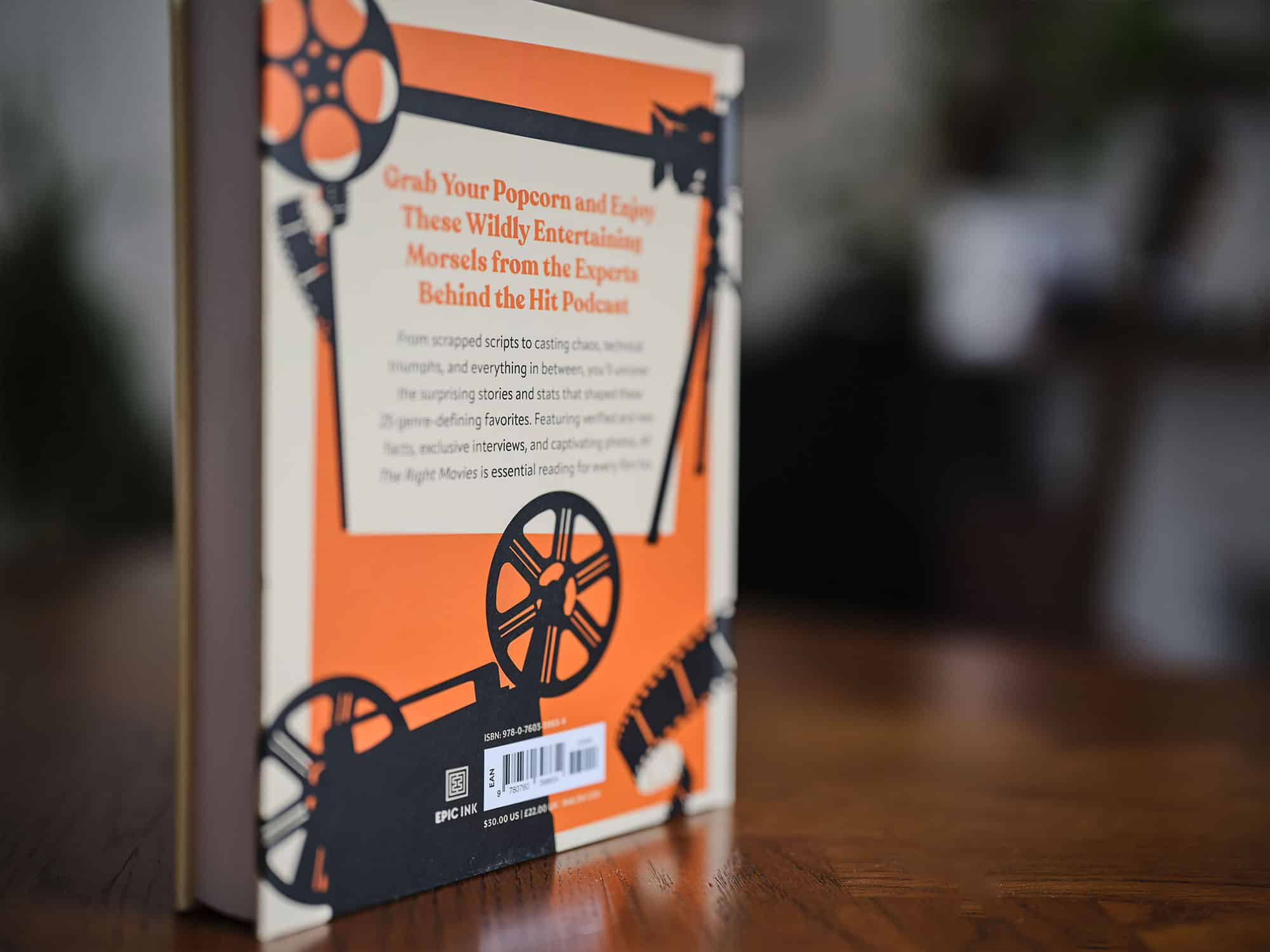
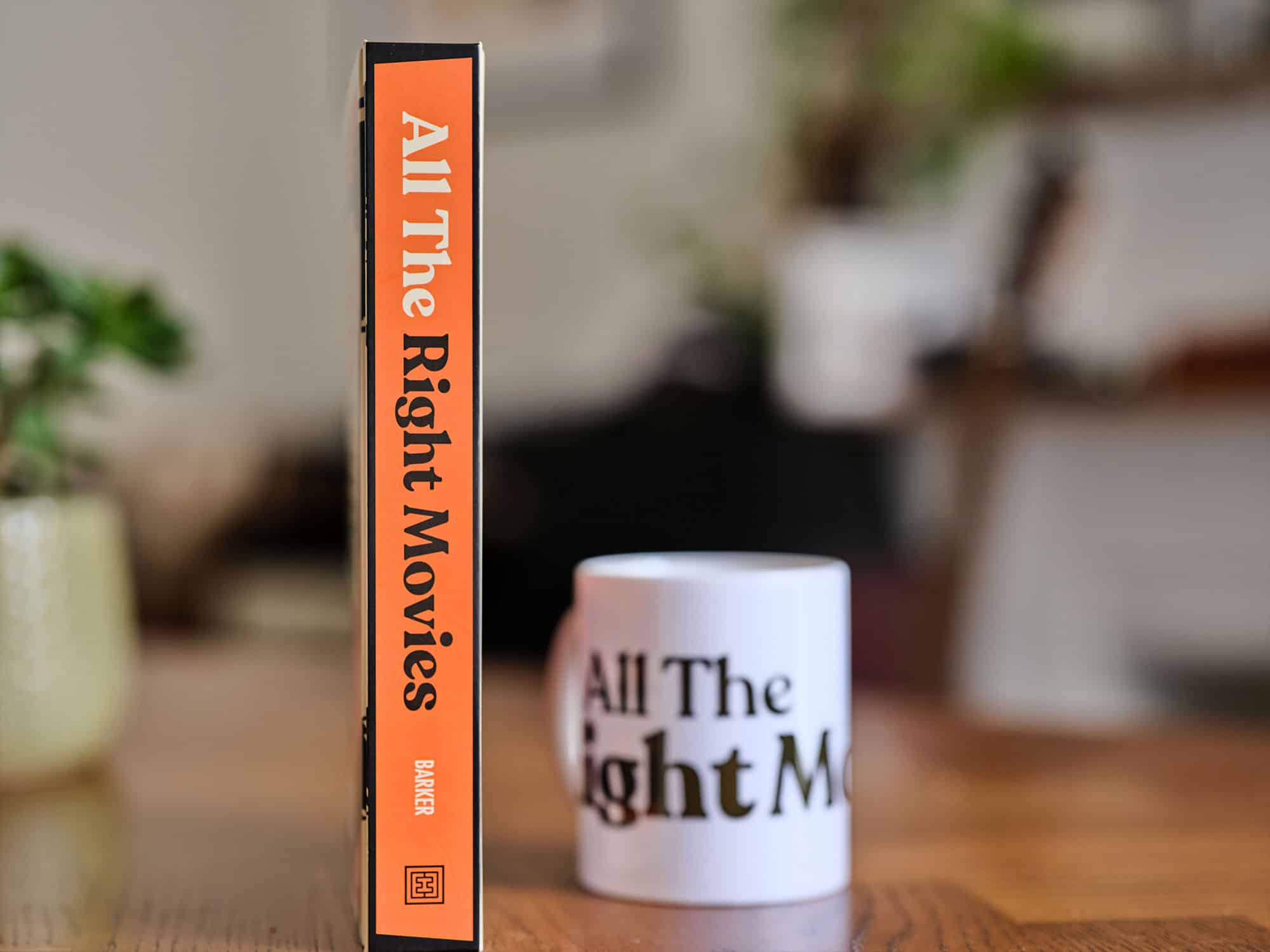
All The Right Movies: The Stories and Secrets Behind the Making of 25 Iconic Films publishes in September 2026 with Quarto. Pre-order it here.
Latest Podcast Episodes

Latest Features
The beginning of a beautiful friendship
Stay up-to-date with all things All The Right Movies by signing up for our e-newsletter.